
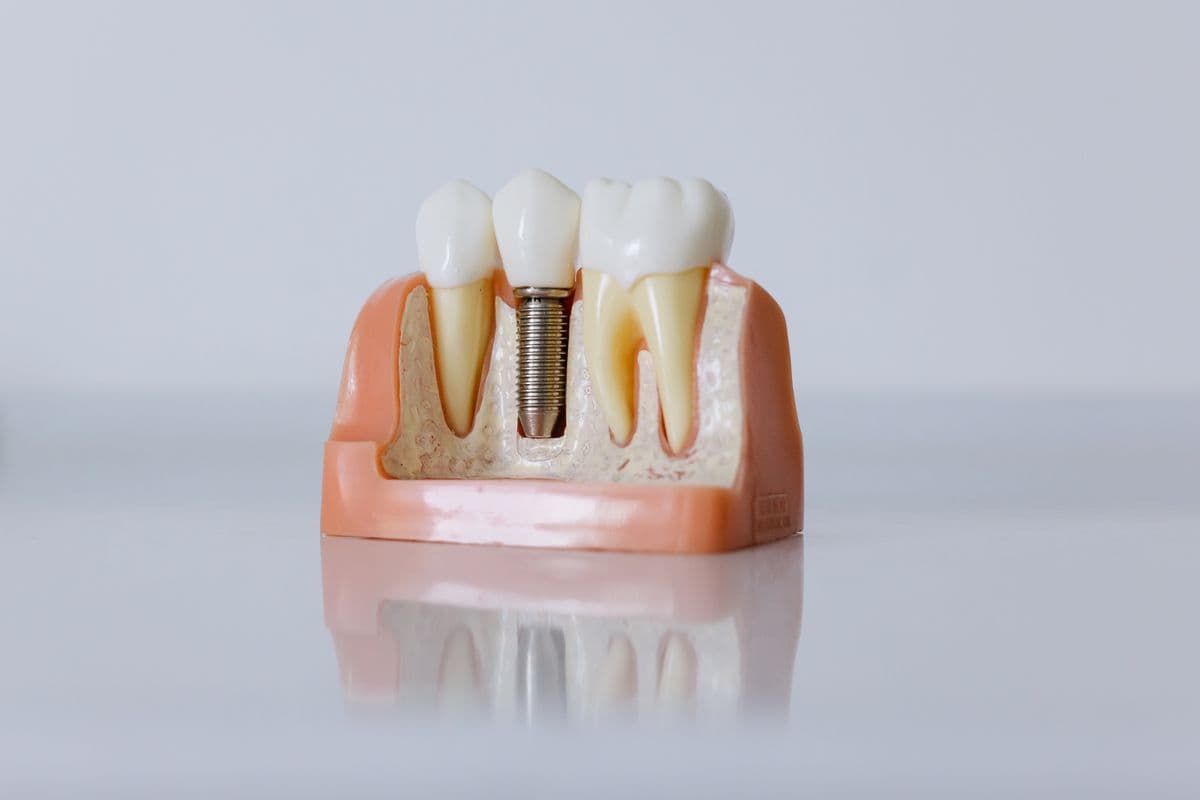
A dental implant is a small titanium post placed into the jawbone to act as an artificial tooth root. Once the bone has fused to it, a crown is fixed on top. The result looks, feels and functions like a natural tooth, and it stands on its own.
The advantage over a bridge is that neighbouring healthy teeth are left untouched. The advantage over a denture is that nothing is removed at night and nothing moves while you eat.
Implants also preserve the jawbone. Bone in the area of a missing tooth shrinks over time because nothing is loading it, which is what gradually changes the shape of the face in people missing several teeth. An implant keeps that bone in use.
What happens at your appointment
So there are no surprises: this is the sequence dental implants follows at Care Plus Dental Clinic.
Assessment and imaging
Examination and imaging establish bone height and width and the position of nerves and the sinus, which determines whether an implant can be placed directly or needs grafting first.
Planning
The implant position, the number needed and the timeline are planned and explained, including realistic total treatment time.
Placement
The implant is placed under local anaesthesia. Most patients are surprised how straightforward the appointment is compared with what they expected.
Healing and integration
The bone fuses to the implant surface over several months. A temporary tooth can often be provided during this period so you are not left with a visible gap.
Crown fitting
Once integration is confirmed, an abutment and a custom crown are fitted, shade-matched to the teeth beside it.
Aftercare
What you do in the days after treatment affects the result as much as the appointment itself.
- Follow the post-surgical instructions closely for the first week, including any prescribed antibiotic.
- Keep the area clean but gentle, as instructed, while it heals.
- Avoid smoking. It is the single biggest risk factor for implant failure.
- Clean around the implant daily with floss or an interdental brush for life; implants do not decay but the gum around them can become inflamed and lose bone.
- Attend your review appointments.
Dental Implants: common questions
How long does the whole implant process take?
Typically a few months from placement to final crown, because the bone needs time to fuse to the implant. Cases needing bone grafting take longer. You will get a realistic timeline at the planning stage.
Is placing an implant painful?
The placement is done under local anaesthesia so you do not feel pain during it. Most patients report less discomfort afterwards than they expected, comparable to an extraction.
How long do implants last?
A well-placed and well-maintained implant can last decades. Success depends heavily on gum health, not smoking, and keeping up cleaning and reviews.
Am I too old for an implant?
Age itself is not a barrier. What matters is bone quality, gum health and general medical health. Conditions like uncontrolled diabetes need to be managed first, which the assessment covers.