
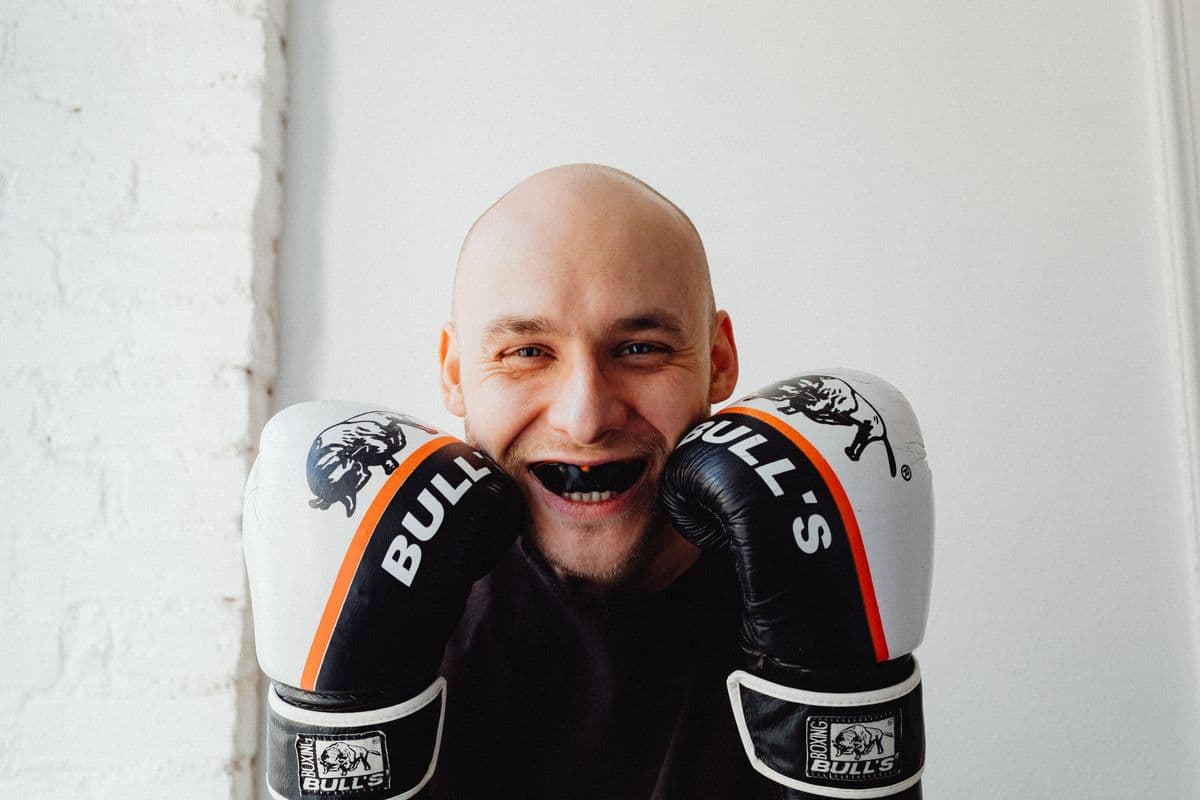
A sports mouthguard absorbs and spreads the force of a knock that would otherwise land on one tooth. It is the difference between walking off a clash of heads and spending the next year in treatment for a tooth that was pushed out of its socket.
The boil-and-bite guards sold in sports shops are better than nothing, but they are moulded to a rough average rather than to you. They tend to work loose, sit bulky against the palate, and get taken out mid-session, which is when the injury happens.
A custom guard is made from an impression of your own teeth, so it grips without being clenched, and you can breathe and speak in it. Dr. Vitkar makes them for boxing, wrestling, MMA, football, hockey and cricket, in black, clear, or another shade.
What happens at your appointment
So there are no surprises: this is the sequence sports mouthguards follows at Care Plus Dental Clinic.
Check and discussion
The teeth and gums are checked first, and you say which sport it is for. A boxing guard and a cricket guard are not built to the same thickness, so this decides the specification.
Impression
An impression of the upper teeth is taken. It takes a couple of minutes, involves nothing sharp, and is the whole reason the finished guard fits you rather than an average.
Fabrication
The guard is made over a model of your teeth, at the thickness the sport calls for, in the colour you picked. This happens between appointments rather than while you wait.
Fitting
You try it in, and the edges are adjusted where it catches. You should be able to talk and breathe with it in. If you cannot, it is adjusted until you can.
Aftercare
What you do in the days after treatment affects the result as much as the appointment itself.
- Rinse it in cold water after every session and let it dry before it goes back in the case.
- Never leave it in a hot car or wash it in hot water: the material distorts and the fit is then gone.
- Bring it to your check-ups so the fit can be reviewed, especially for children and teenagers whose teeth are still moving.
- Replace it when it thins, splits or stops gripping. A guard that has to be held in place with the jaw is no longer doing its job.
- If you take a knock and a tooth feels loose or has moved, get seen the same day rather than waiting for it to settle.
Sports Mouthguards: common questions
Is a custom mouthguard really better than a boil-and-bite one?
It fits, which is the part that matters. A guard moulded to your own teeth stays in place without being clenched, so it is still there when the knock lands. Shop-bought guards are commonly taken out mid-session because they are bulky or work loose, and a guard in your kit bag protects nothing.
How many visits does it take?
Two. The first is a check and the impression, the second is the fitting once the guard has been made. Both are short appointments.
Can I wear one over braces?
Yes, and it is worth doing. A knock to the mouth with fixed braces on drives the brackets into the lip. A guard made to fit over the appliance is made differently from a standard one, so mention the braces when you book.
Can I speak and breathe with it in?
Yes. That is the practical test at the fitting appointment, and the guard is adjusted until you can. A guard you cannot breathe in is one you will take out.
Do children need one?
In contact sport, yes. Front teeth damaged in childhood need looking after for the rest of a life, and the growing jaw means the guard is checked and remade more often than an adult's.
I have already chipped a tooth playing. What now?
Come in and have it looked at, because a chip that looks cosmetic can still have opened the tooth up. The repair options are covered on the cosmetic dental fillings page, and a guard is usually made once the tooth is sorted.