
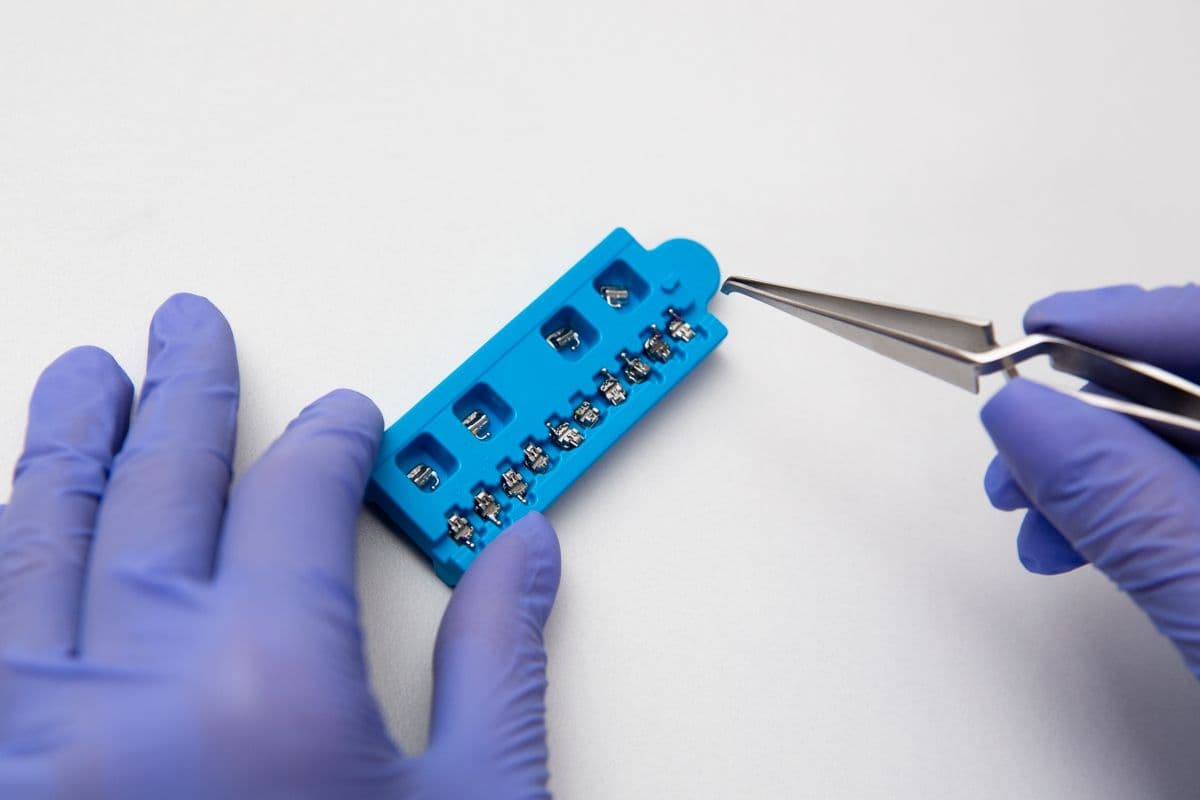
Orthodontics corrects the position of the teeth and the way the upper and lower jaws meet. It covers crowding, gaps, protruding front teeth, crossbites and deep bites, using braces, clear aligners or, in growing children, functional appliances.
Straightening teeth is not only cosmetic. Crowded teeth trap plaque in places a brush cannot reach, which drives decay and gum disease. A bite that meets unevenly wears specific teeth down faster and can contribute to jaw joint pain.
Treatment works at any age. Children are assessed early because their jaws are still growing, which allows problems to be guided rather than corrected later, but a large share of orthodontic patients today are adults.
What happens at your appointment
So there are no surprises: this is the sequence orthodontic treatment follows at Care Plus Dental Clinic.
Assessment and records
Examination, photographs, impressions or a scan, and X-rays where needed, to see the roots and the jaw relationship rather than just the visible crowns.
Treatment plan
The options that would work for your case are explained with their real trade-offs in time, appearance and cost, and you choose between them.
Fitting the appliance
Braces are bonded to the teeth, or your first set of aligners is fitted, depending on the route you chose.
Regular adjustments
Periodic appointments adjust the force as the teeth move. Most of the treatment time is simply waiting for bone to remodel around the moving roots.
Retention
Once teeth are in position, retainers hold them there. Teeth drift back without retention, so this stage is not optional.
Aftercare
What you do in the days after treatment affects the result as much as the appointment itself.
- Expect some tenderness for a few days after fitting and after each adjustment.
- Clean thoroughly around brackets and wires; decalcified white marks around brackets are permanent.
- Wear retainers exactly as instructed once the appliance comes off.
- Keep routine check-ups going throughout treatment.
Orthodontic Treatment: common questions
How long does orthodontic treatment take?
It depends on the case. Minor corrections can take a few months; comprehensive treatment commonly runs one to two years. You will be given a realistic estimate for your specific case at the planning stage.
Am I too old for braces?
No. Teeth move at any age as long as the gums and supporting bone are healthy. Adults make up a large share of orthodontic patients, and clear aligners have made treatment far less visible.
When should a child first be assessed?
Around 8 to 10 years of age is a useful first assessment, while the jaws are still growing. Some problems are much simpler to guide at that stage than to correct after growth finishes.
Do I have to wear retainers forever?
Retainer wear reduces over time but some long-term night-time wear is usually recommended. Teeth have a natural tendency to drift back, and retention is what protects the result you paid for.